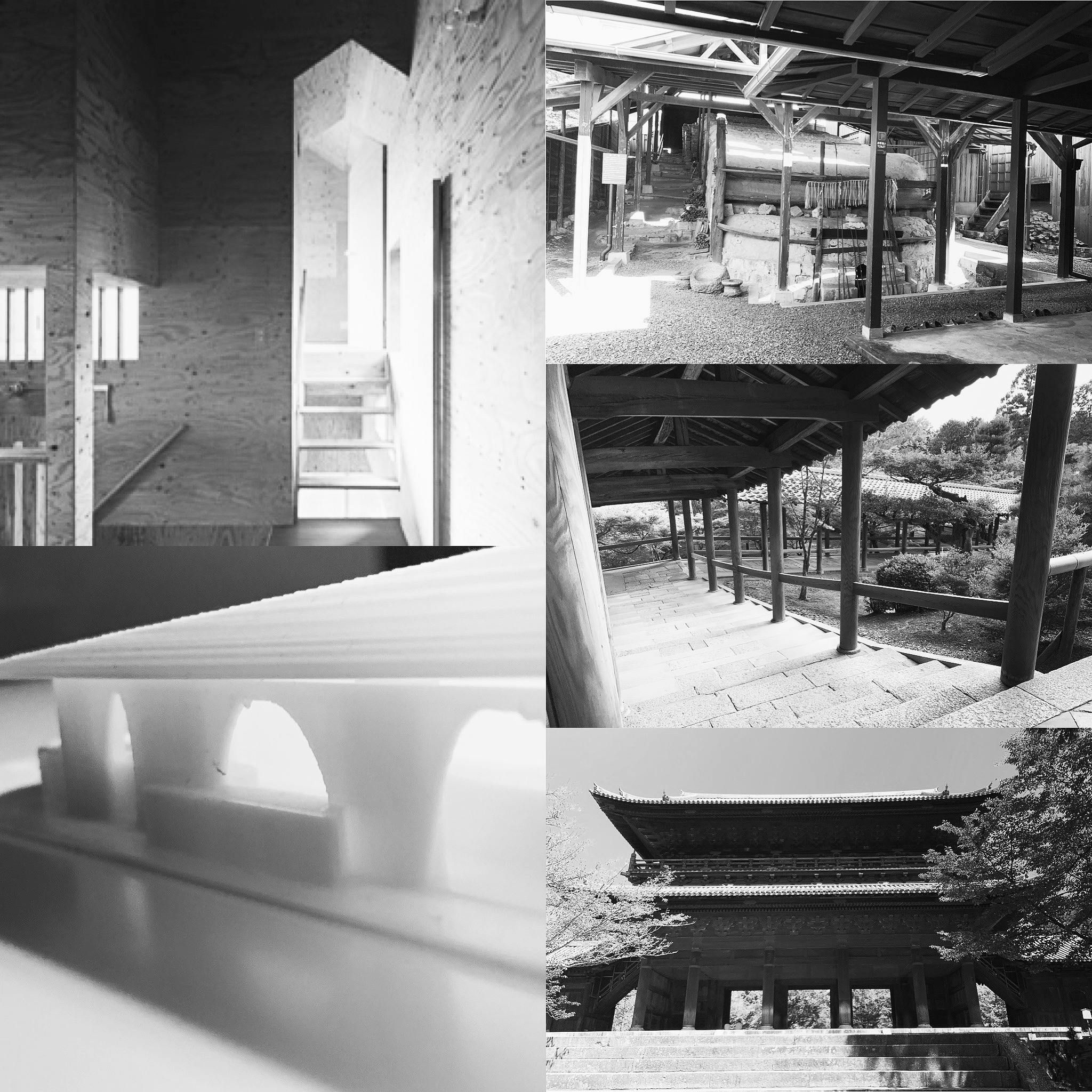
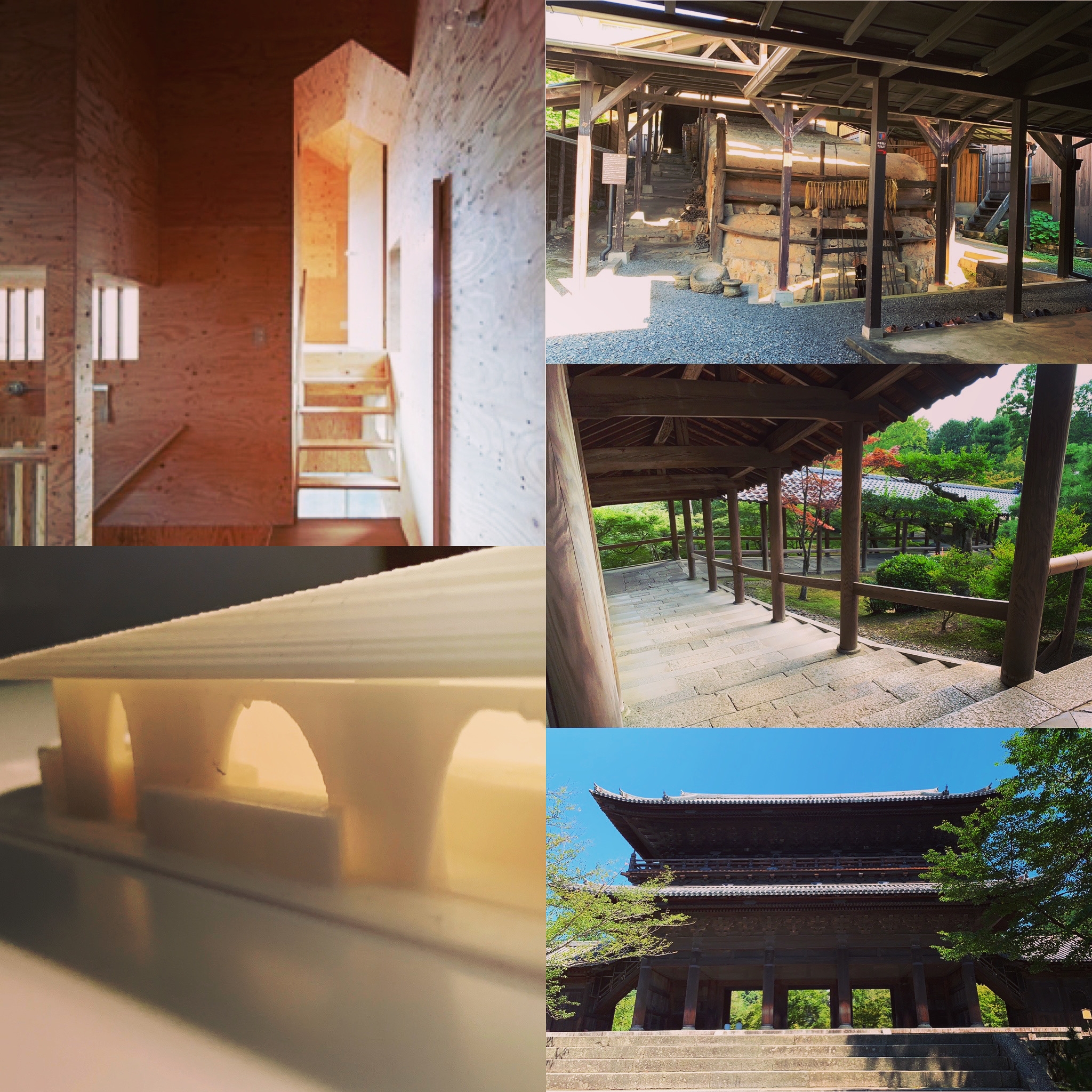
空間消失

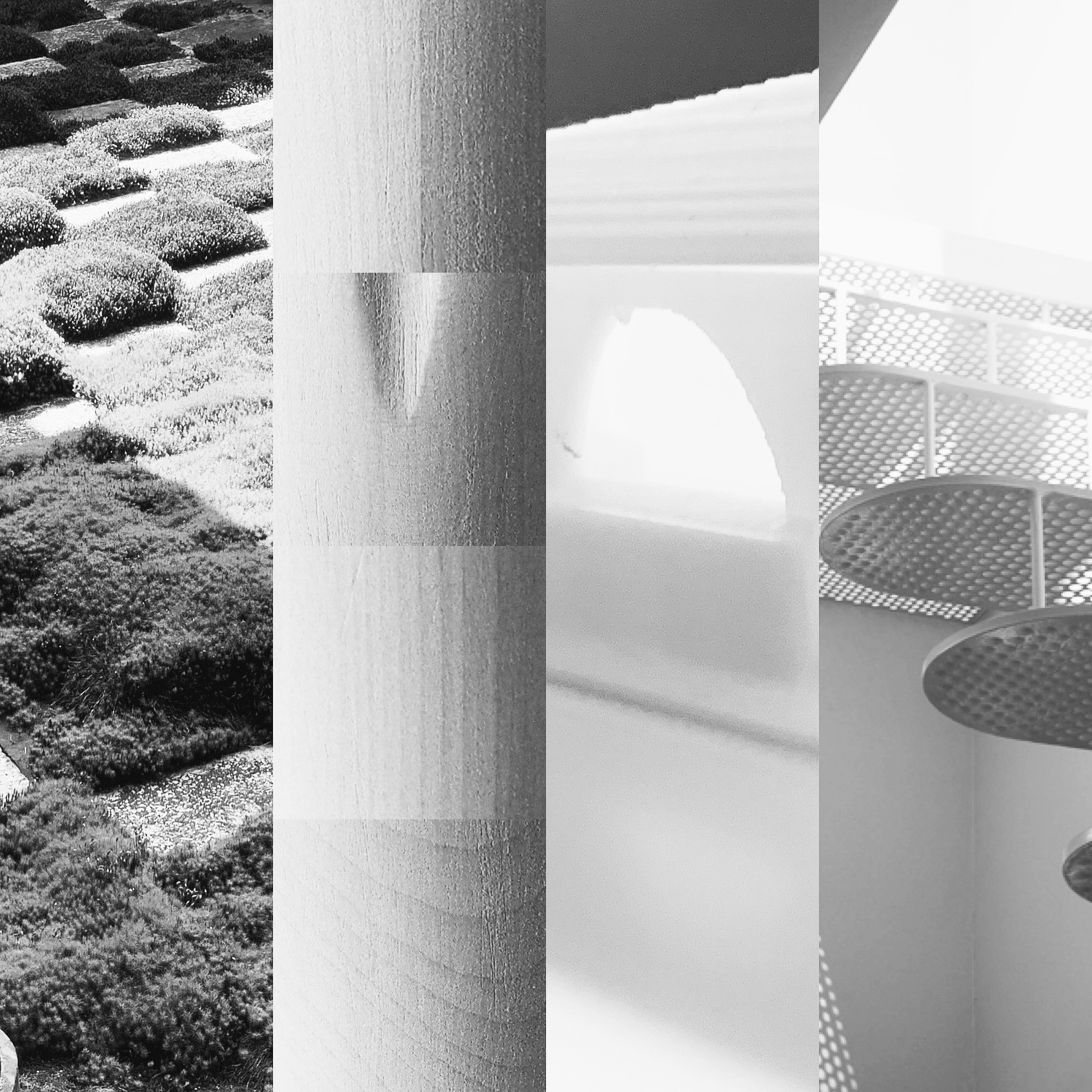
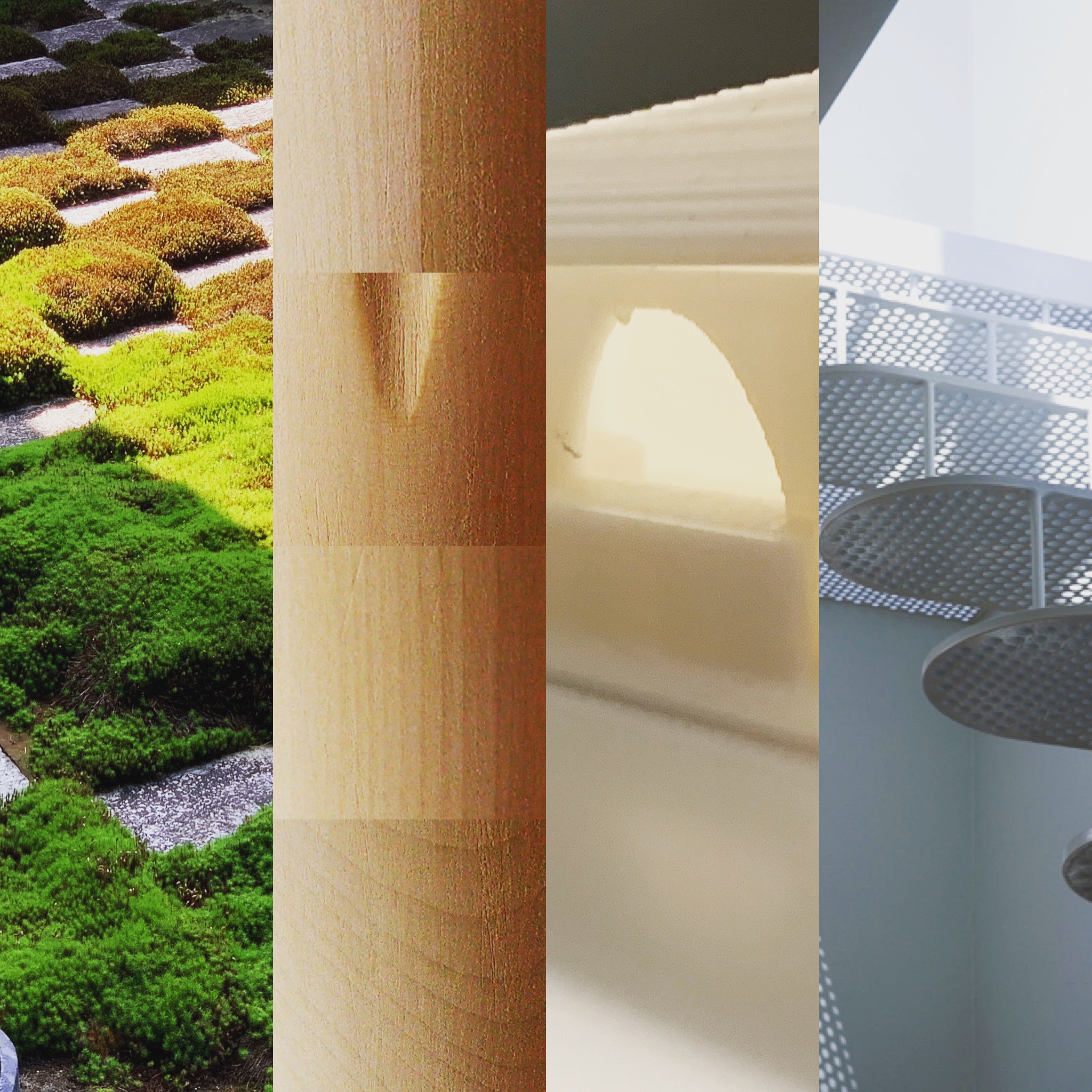
自然素材が持っている物質感が空間を消失してくれると考えた。

例えば、たくさんの石が集まることにより、ひとつの造形をつくり出し、その造形は空間が持つ空虚を埋めて、尚且つ、物質感だけが持ち合わせているスケール感へと引きづりこむ。それは物質感の強度に関係なく、造形が生み出すスケールを感覚的に増幅させる。

6A58D3C4-14F0-4C6B-AF99-753B0354AD3C.jpeg

この増幅された感覚的なスケールが空間にとって代わることにより空間が消失する。

"Space disappearance"

I thought that the materiality of natural materials would eliminate the space.

For example, by gathering a lot of stones, one model is created, and the model fills the emptiness of the space and draws it into a sense of scale that only the physical feeling has. It sensuously amplifies the scale produced by modeling, regardless of the intensity of the material feeling.

Space disappears when this amplified sensory scale replaces space.

リンク

空間を消失させる物質

空間を満たす物質は誰でも妥当性を感じるものにしたい。いくらでも物質は存在し選び放題だが、妥当性を獲得するものは案外少なく、さらに、その物質に可能性を感じ、採用したくなるものも案外少ない。

さらに言うと物質感が空間を消失してくれるようなものがいい。建築のつくり方は必然的に空間を発生させてしまうので、その空間を否定をする訳ではないが、空間が優位になりやすい。それは空間至上主義にもつながり、例えば、わざと天井を低くくしたりなど、空間のボリュームを過度にデザインするようなことをしだす。

75422C06-4D05-4850-9971-E8E2429473BF.jpeg

平衡なデザイン感覚の上に成り立つ建築でないと空間も活かされないので、今は空間を消失させるような物質感を求める感覚が必然的になってしまう。

"Substances that make space disappear"

We want everyone to feel the validity of the substance that fills the space. There are as many substances as there are, and you can choose as many as you like, but there are surprisingly few that acquire validity, and there are also surprisingly few that feel the potential of the substance and want to adopt it.

Furthermore, it is good that the material feeling disappears the space. The way of building architecture inevitably creates space, so I do not deny that space, but space tends to be superior. It also leads to the principle of space supremacy, for example, by intentionally lowering the ceiling, and over-designing the volume of the space.

Space cannot be utilized unless the architecture is built on a balanced design sense, so now it is inevitable to have a sense of materiality that makes the space disappear.

リンク

物質感で満たす

共通の物質感があるだろうと仮定して、それを探るようなことをしている。そもそも決められた空間が存在しているので、あえてまたそこで空間性を持ち出してきて違う空間を求めるよりは、今ある空間は受け入れて、それに対して何ができるかを考える方が妥当性があり、可能性があると考えた。

52168A39-F84F-4D0F-9FCD-76B69526AB2A.jpeg

空間はすでに存在しているのだから、実体としての物質性を持ち込み、その物質感によって空間を満たすことが一番素直な解答のような気がしている。

"Fill with material feeling"

I'm trying to explore it, assuming that there will be a common sense of materiality. Since there is a fixed space in the first place, it is more appropriate to accept the existing space and think about what can be done for it, rather than dare to bring out the spatiality there and seek a different space. , I thought there was a possibility.

Since space already exists, I feel that the most straightforward answer is to bring in materiality as an entity and fill the space with that material feeling.

リンク

空間より物質

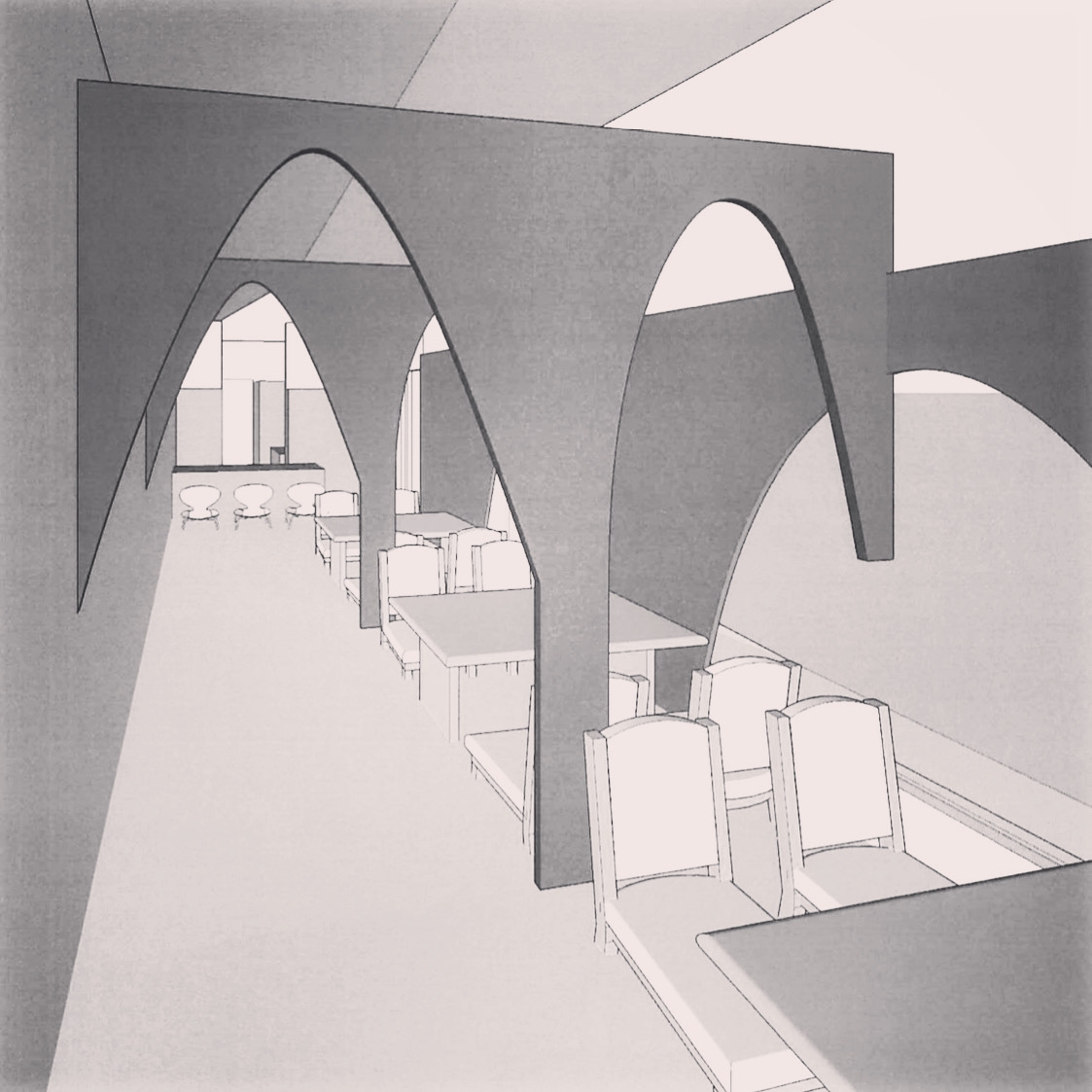
壁だけがある空間と屋根だけがある空間、どちらの場合も空間がそこにあることを認識できるが、決して同じような感じを抱かないだろう。

空間にそれほど期待しないが、今いる場所が少しでも雰囲気よく気持ちよくなればいいと思い、さらに、壁だけがある空間では、屋根だけの空間より物質性も容易に感じることができるのではないか、むしろ壁だけだと空間性より物質性の方が優位になるかもしれない。

F4054997-137A-49E6-8EFF-5DCC4767C8EA.jpeg

物質性がアクティビティを誘発することは、空間性に頼らずに建築とアクティビティがつながることであり、空間を否定する訳ではないが、かと言って過度な空間信奉には違和感があるので、余計に壁に興味を持ってしまう。

"Matter from space"

In both cases, a space with only walls and a space with only roofs, you can recognize that the space is there, but you will never feel the same.

I don't expect much from the space, but I hope that the place I'm in now feels good and comfortable, and in a space with only walls, I think it's easier to feel the materiality than in a space with only a roof. Rather, if it is only a wall, materiality may be superior to spatiality.

The fact that materiality induces activity means that architecture and activity are connected without relying on spatiality, and it does not mean that space is denied. I'm interested in the wall.

リンク

屋根から下の部分

屋根が誘発するアクティビティがあるとしたならば、屋根の形態や位置でアクティビティが決まる。そうすると屋根の細部はアクティビティにどれ程の影響を与えるのだろうか。

屋根とって細部は主に端部になり、人の目に一番触れるところでもある。屋根を主体に建築を考えたならば、屋根から下の部分は端部になり、細部になる。屋根にとっての細部は屋根の形態や位置などで決まるアクティビティにまた違った変化を与えるだろう。

14142FEA-FA6B-455E-A535-395D3BE1F269.jpeg

だから、建築を屋根と屋根から下の部分で分解して考えることにより、建築が誘発するアクティビティを複雑化することができると考えてみた。

"The part below the roof"

If there is a roof-induced activity, the shape and position of the roof will determine the activity. So how much does the roof detail affect the activity?

The details of the roof are mainly the edges, which is also the most visible to the human eye. If you think about architecture mainly on the roof, the part below the roof will be the end and the details. The details for the roof will make a different difference to the activity, which depends on the shape and position of the roof.

Therefore, I thought that it would be possible to complicate the activities that the architecture induces by disassembling the architecture into the roof and the part below the roof.

リンク

場所として成り立つ

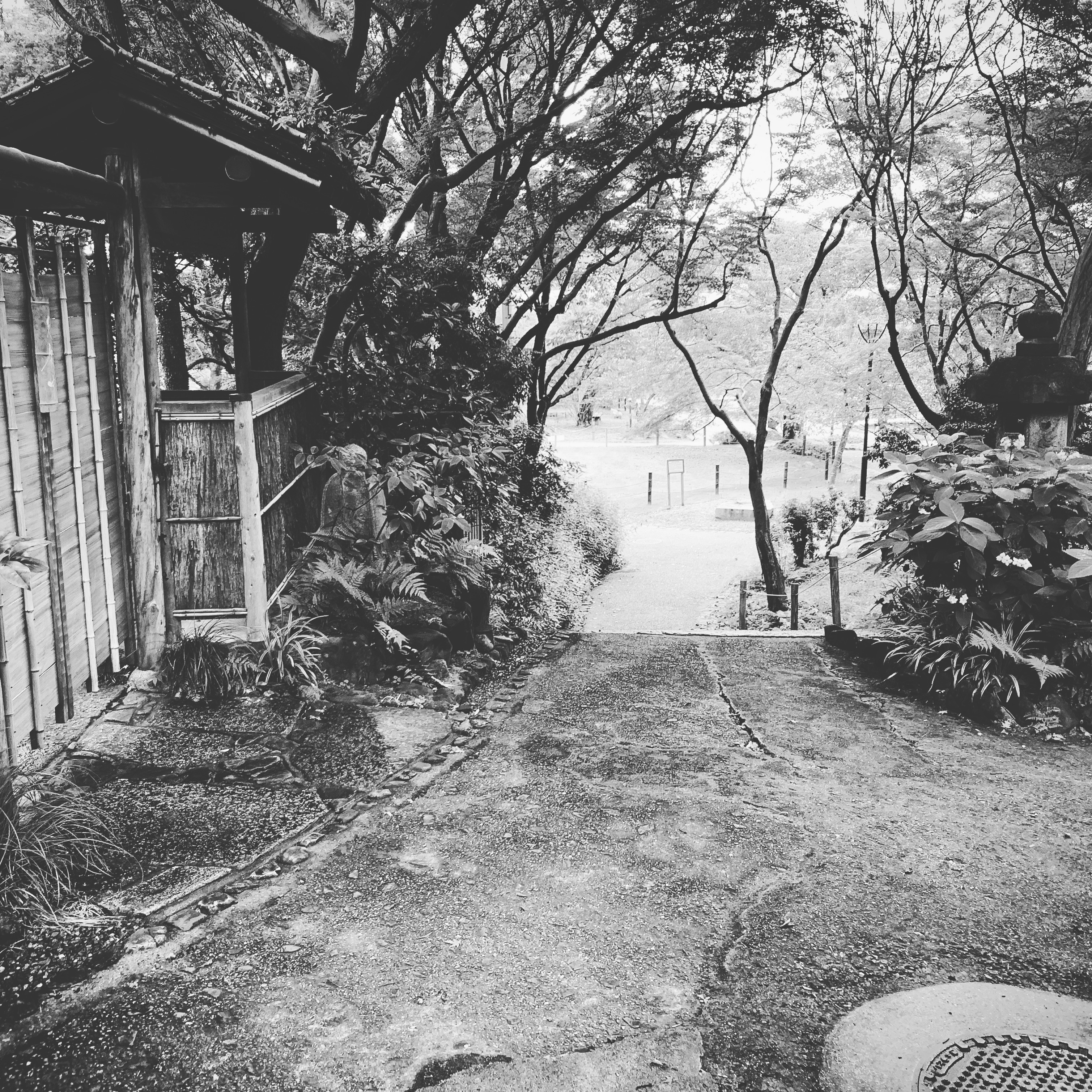
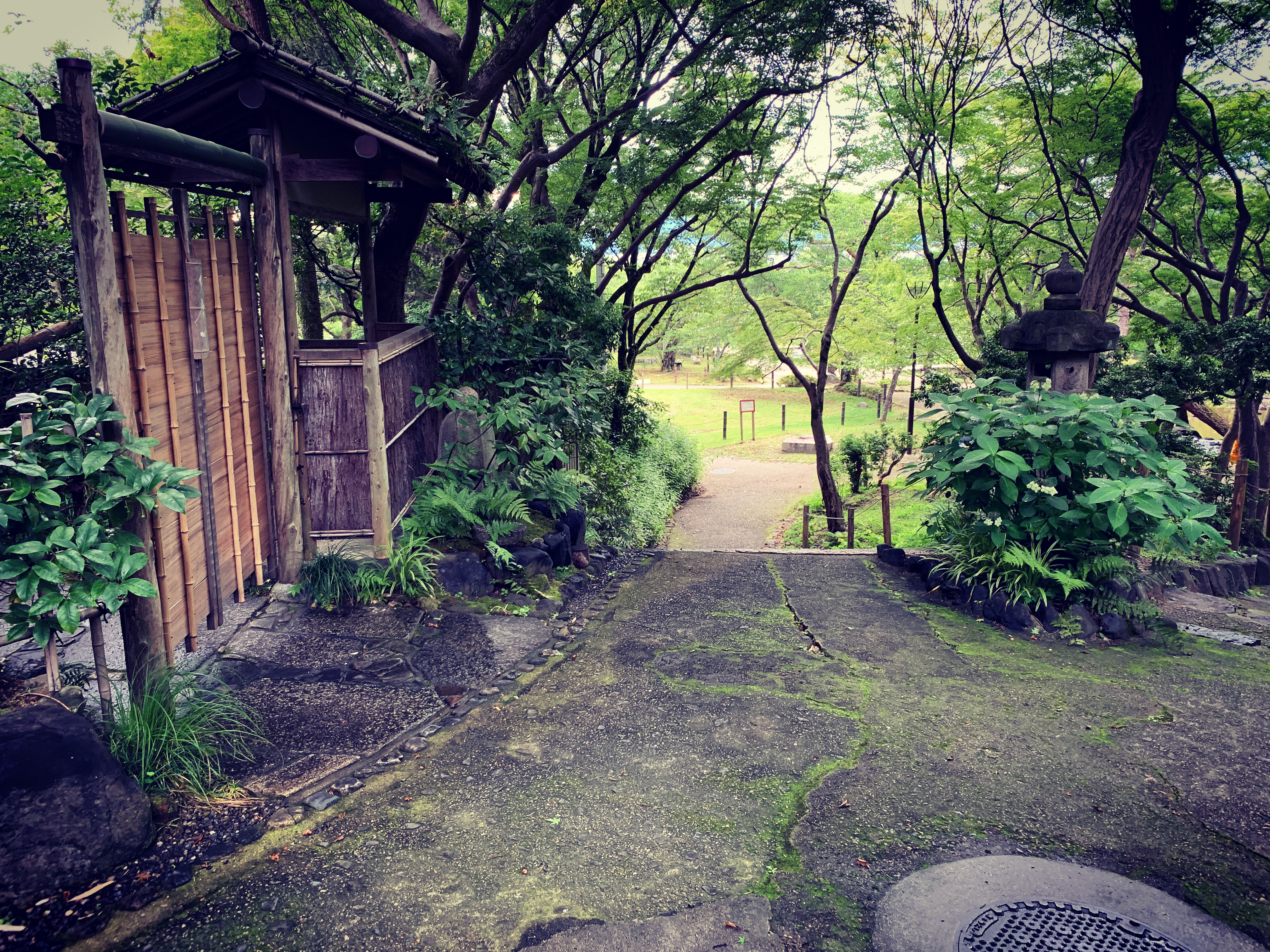
暑いとつい日陰を探し、歩いている時も建物の影を踏みながら、少しでも涼しいようにと、暑いと思う気分がそうさせる。だから、庭園の中などにある四阿(あずまや)は屋根だけで構成されていて日陰ができるので、木陰に腰掛けるような感覚で佇む気分にさせてくれる。

この暑い時期は涼みたいという欲求がきっかけになり日陰を探す行動をし、そこに日陰があればすっぽりとおさまる。その日陰は何でもいいが、日陰を探す行動を取る時に日陰自体を探すのではなくて、日陰ができそうな所を探している。今までの経験上、日陰ができる仕組みから日陰ができそうな所を予測して探している。
93D14826-46CC-4F2D-8FE5-26AA535B788A.jpeg

だから、四阿を見かけただけで、涼しく休憩できる、と瞬時に思い、そこで佇む。これは四阿という建築形態がアクティビティを誘発するひとつのパターンだが、建築形態とアクティビティの間に予測が存在しており、その予測は人の経験値から割り出されるが、一般的なものなので万人に通用する。この万人に通用することが一般解につながり、四阿が休憩する場所として成り立つ。

"It works as a place"

Looking for the shade when it's hot, and stepping on the shadow of the building while walking, it makes me feel like it's hot, trying to be as cool as possible. Therefore, Azumaya in the garden is made up of only the roof and can be shaded, so it makes you feel like you are sitting in the shade of a tree.

In this hot season, the desire to be cool triggers the action of searching for a shade, and if there is a shade there, it will be completely settled. The shade can be anything, but when you take action to look for the shade, you are not looking for the shade itself, but looking for a place where you can have a shade. Based on my experience so far, I'm looking for a place that is likely to be shaded from a mechanism that can be shaded.

Therefore, I instantly thought that I could take a cool break just by seeing Shia, and I stood there. This is one pattern in which the architectural form of Shia induces activity, but there is a prediction between the building form and the activity, and the prediction is calculated from the experience value of a person, but since it is a general one, everyone It works for. This universal solution leads to a general solution, and it is established as a place for Shia to take a break.

リンク

屋根の存在

屋根がどこまでも続けば、その下は移動可能な空間だと思い、屋根が点在していれば、その下は立ち止まり休憩できる空間だと思うかもしれない。屋根の大きさや長さ、位置より判断して、アクティビティを誘発し制限する。

この場合、細部はアクティビティの決定に影響を与えないので、細部に別の何かを、機能であったり、デザインや装飾を施して誘発するアクティビティにまた違った変化を与えることも可能になる。

02264B35-7631-49C5-B2D7-0F0E19026881.jpeg

アクティビティを誘発し制限するような屋根は、単に雨風を防ぎ、暑さ寒さを凌ぐだけの存在から別の存在へと昇華する。

"Existence of roof"

If the roof continues forever, you may think that the space underneath is a movable space, and if the roofs are scattered, you may think that the space underneath is a space where you can stop and rest. Judging from the size, length and position of the roof, it induces and limits activities.

In this case, the details do not affect the decision of the activity, so it is possible to give something else to the details, a function, or a different change in the activity triggered by designing or decorating.

A roof that induces and limits activity simply prevents rain and wind, and sublimates from being one that survives the heat and cold to another.

リンク