想起

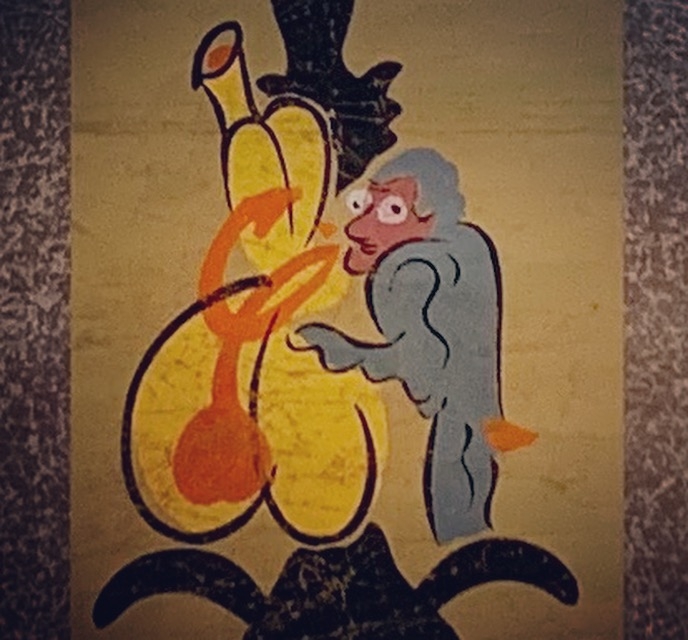
モダニズムでの絵画は、モチーフの陰影が消え、そのモチーフ自体も輪郭線だけになり、二次元化する。それは一目見るだけで、全体を把握しやすくし、視覚以外の感覚は排除して、本質に迫ろうとした。実際には絵画に触れることができないが、質感としてあるのは、キャンバスと絵の具だけだった。

この絵画は、モダニズムより前の時代の反動だが、一方、日本には、岩絵具を使い、陰影など無い二次元化された絵画があった。

そこには、岩絵具としての質感は勿論あるし、和紙の質感もあるのだが、それらの質感が前面に感じることは無く、モチーフとなるものに沿うように発色し、しっとりとした印象を与えることに寄与していた。二次元化が決してモチーフを視覚で捉えやすくするためでは無く、むしろ、視覚以外の感覚を誘発し、それを岩絵具の顔料としての質感と発色が後押しし、見る側に様々な事を想起させ、モチーフをよりリアルに感じさせた。

いわゆる洋画は表現された事を、見る側はそのまま受け取るだけに設定され、その設定がモダニズムであったり、時代性だったりした。

いわゆる日本画は何かが不足しているか、何かが実物の見た目と違う、それが二次元化、そこを補うことを、見る側が想起する、無意識のうちに、その想起する余地が、同じ二次元化された絵画でも違う所で、感じるリアルさが違う所で、概念より目の前に全てがあり、それをどう感じるか、時代の反動では無い方が絵画として、モチーフの本質に迫ることができるだろうし、破綻もしないし、絵画としてだけ相対することができるから、それは素晴らしいことではないか、この文化圏に目を向けることが。
B680B212-6D80-47CD-B043-51FC6CAA26B7.jpeg

"Recollection"

In modernism paintings, the shade of the motif disappears, and the motif itself becomes only an outline, and it becomes two-dimensional. At a glance it made it easy to grasp the whole, excluding senses other than vision and trying to approach the essence. Actually I can not touch the painting, but only the canvas and the paint have the texture.

This painting is a reaction of the days before modernism, while in Japan there was a two-dimensionalized painting that used rock paint and had no shadows.

There is, of course, the texture as a rock paint and the texture of Japanese paper, but the texture does not feel on the front, and it colors in accordance with the motif and gives a moist impression Contributed to the Two-dimensionalization is by no means to make the motif easy to see visually, but rather, it induces a sense other than visual sense, and it is inspired by the texture and color of the paint as a pigment, and evokes various things on the viewing side , I made the motif feel more realistic.

The so-called foreign film was set to just receive what was expressed, and the viewer was set to just receive it, and the setting was modernism or it was historical.

The so-called Japanese paintings lack something or something is different from the real appearance, it is two-dimensional, making up for that, the viewer recalls, unconsciously, the same room for recalling the same Even in a two-dimensionalized picture, in a different place, in a place where the feeling is different, there is everything in front of the concept and how it feels, one who is not a reaction of the times approaches the essence of the motif as a painting You will be able to do it, you will not fall apart, and you will only be able to confront each other as a painting, so it's not a great thing to look at this culture.
触る

とても乱暴に大雑把に言えば、モダニズムとは他の感覚を全部削ぎ落として視覚に特化し、触れること無しに本質に迫ろうとしたことで、モダニズム以後はその反動でしかない。

モダニズムでは、他の感覚、触覚や嗅覚、味覚、聴覚で把握できる情報を全て視覚に変換し、それが可能なのは、人間の知覚構造の特色かもしれない、視覚から8割の情報を得ているからで、一目で本質を把握できるようにし、それを写真に収め、ネットの無い時代に写真という身軽な伝達方法に載せた。

だから、視覚以外の感覚に関連することは全部消えていく。

絵画では、モチーフの陰影は消え、そのモチーフ自体も輪郭線だけになり、やがてモチーフ自体も消える。建築でも形自体に意味があると、空間を視覚的に一目で把握できなくなるから、意味を持たせないように余分な線は消え、根源的な幾何学形態になり、それは仕上げについても同じで、白くなり、絵画同様、空間も輪郭線だけになり、やがて空間自体もどこまでが空間かわからなくなる。

そこでは人間も必要で無くなる、人間を意識してしまうと、触覚や嗅覚、味覚、聴覚が現れてくるから。だから、建築では生活感が必要では無くなった。

モダニズム以後はその反動、視覚以外の感覚が復活し、触れることで得られる感覚も通して、本質に迫り、人もそこに介在する。写真以外の伝達方法も発達したから、生活感も必要になり、それが現代まで続くが、人がやることだから、人が介在するのが当たり前なのだが、そのモダニズムも、モダニズム以前の反動でしかない。

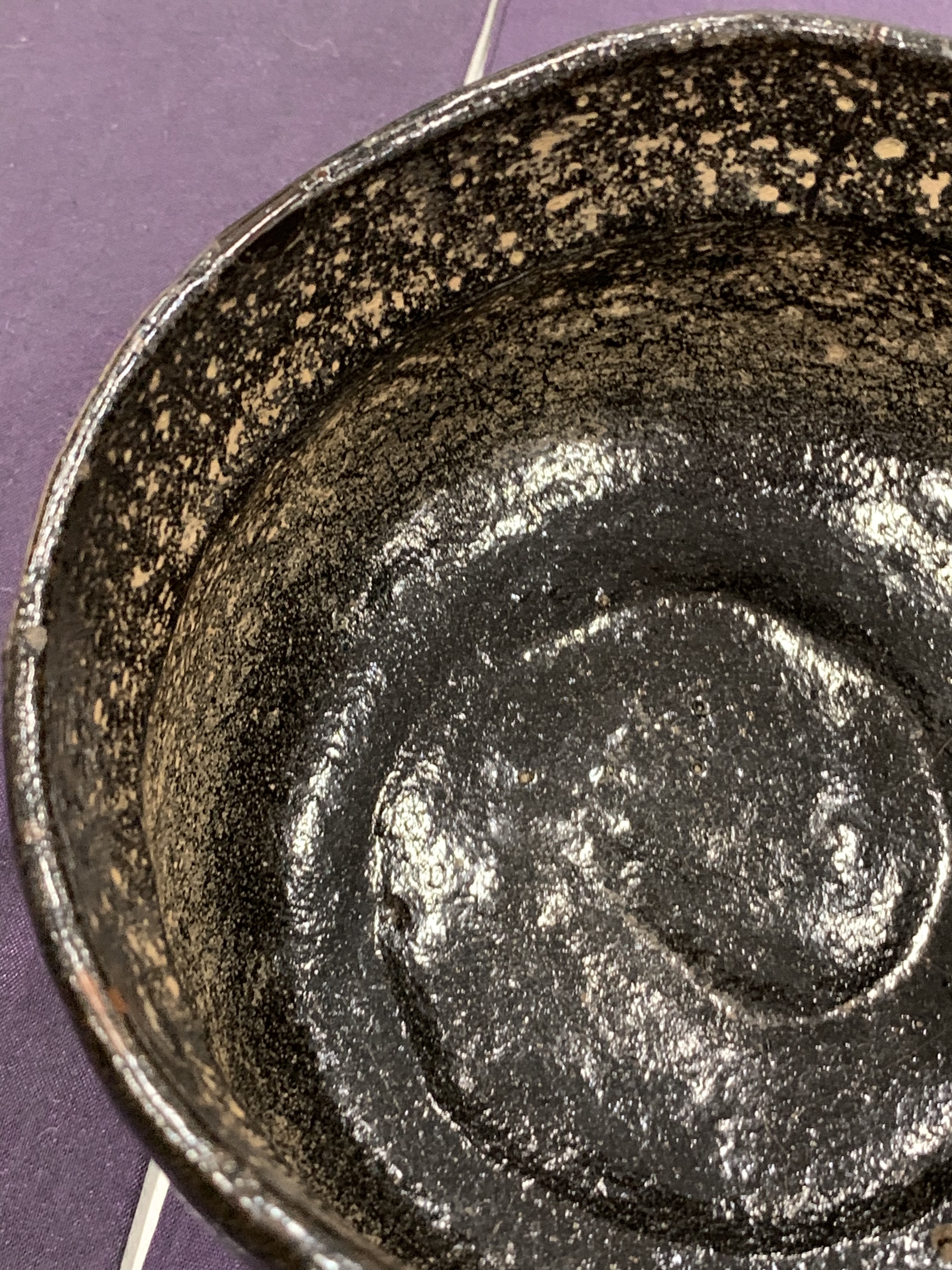
古美術の茶碗を触れる機会があった。なかなか滅多に見られるものでは無いから、箱や箱書きから茶碗まで、写真を撮りまくった。それは記録に残して後から見返すこともできるためだが、自分の手の中に留めておきたいという衝動にかられ、そのためにはまず、写真を撮ろうとしてしまう、ただ触らずにはいられない。

見るだけで、感触までわかろうと思えばわかるが、触ることでしか得られない情報があるだろうし、耳から入る知識も重要だが、一番大事なのは持った時の感触、持って見て触った時に自分がどう思うか。

だから、ひとつひとつ丹念に触った。散々触った後に、ふと、モダニズムはあったのだろうか茶碗に、と思った。

1D851016-2B05-492C-9B99-AC51B44EBB49.jpeg

"touch"

Roughly speaking roughly, modernism is nothing more than repercussions after modernism, as it attempts to immerse itself in the essence without scraping it and touching all other senses.

In modernism, information that can be grasped by other senses, tactile sense, olfactory sense, taste sense, and auditory sense is all converted into vision, and it is possible to obtain features of 80% of information from vision, which may be characteristic of human perceptual structure So I made it possible to grasp the essence at a glance, put it in a picture, and put it in a light communication method called a picture when there was no internet.

So everything related to senses other than visual disappears.

In paintings, the shade of the motif disappears, the motif itself becomes only the outline, and eventually the motif disappears. Even in architecture, when the form itself makes sense, the space can not be grasped visually at a glance, so the extra lines disappear so as not to make sense, and it becomes the basic geometric form, which is the same for finishing as well. It becomes white, and like paintings, the space is only an outline, and eventually the space itself does not know how far it is.

There is no need for human beings, because when you are conscious of human beings, touch, smell, taste and hearing will appear. So, in architecture, a sense of life was not necessary.

After modernism, its reaction, the senses other than vision revives, and through the senses obtained by touching, the essence approaches and the person also intervenes there. Since communication methods other than photography have also been developed, a sense of life is also required, and so does the present, but because people do it, it is natural for people to intervene, but its modernism is only a reaction before modernism. Absent.

I had the opportunity to touch the teacup of the old art. It is not something that is rarely seen, so I took pictures from boxes and boxes to teacups. It is possible to leave it in the record and to look back later, but because of the urge to keep it in your own hands, you can not help but just try to take a picture first.

If you just look, you will understand if you feel the touch, but there will be information that can only be obtained by touching and knowledge that can be heard from the ear is important, but the most important thing is the feel when holding it, holding it and touching it What do you think sometimes?

So I touched it one by one. After touching it a bit, I thought it was a teacup, probably there was modernism.

言葉より先に

建築に対する考え方やアプローチの仕方やコンセプトは素晴らしいのに、どこかで見たような、既視感に襲われるようなことがある。

建築を言葉からイメージしようとすると、言葉から実際の建築や空間に変換する時の能力が問われる。引き出しがたくさんあるのか、レシピをいっぱい知っているのか、どこまで知覚できるのか、などなど。どうしても、今まで見てきた建築や空間が頭を過る、それは意識して先人の建築から何か学ぼうとすればする程、そうなる。

よく聞くのが、後付けでコンセプトを考えること。与条件に対応して設計した建築に対して、後から考えを整理してまとめること。案外多く、後付けだから、コンセプトに対して実際に出来上がった建築や空間が破綻していない、当たり前だけど。案外その方が既視感も無かったりする。

だから、はじめから既視感が無いものをつくろうとし、後からそこに至る考え方をまとめても良いだろうし、その方が、既視感が無いことは新しいことでもあるので、言葉より建築空間生成が先になり良いのではないだろうか。

79F9F181-841C-4C04-9EC1-238F2FC4D310.jpeg

"Before words"

Though the way of thinking and approach to architecture and the concept and concept are wonderful, there are times when they are struck by a sense of devil as seen elsewhere.

When trying to image architecture from words, the ability to convert words into actual architecture and space is questioned. Whether you have a lot of drawers, you know a lot of recipes, how far you can perceive, etc. Anyway, the architecture and space I have seen so far have a head, which is the more I consciously try to learn something from my predecessor architecture.

I often ask you to think about the concept later. Organize and organize your ideas later for the buildings designed in response to the conditions. Unexpectedly, because it is retrofit, it is natural that the architecture and space actually completed for the concept have not collapsed. Unexpectedly there is also no sense of sight.

Therefore, it is possible to try to create something that has no sense of sight from the beginning, and to organize ideas that lead to that later, and it is also a new thing that there is no sense of sight, so building space generation rather than words Aren't you good at first?

視覚優位以外

しみじみいいな、と、パッと見いいな、は両立するのかな、と考えていた。

人は視覚からの情報が8割、だから、第一印象が大事で、綺麗な人や清潔に見える人は好印象になる。頭が良さそうは必ずしも好印象とはならないらしい。

要するに、視覚が優位に働き、何かを意識してやらないとそこから逃れられない。見た瞬間に表象化がはじまり、これは条件反射なので、無意識に行い、様々な情報を勝手に取得してしまう。この情報を元に様々な思い込みや決めつけをする、とてもニュートラルや平等に見ることなどできない。

だから、パッと見いいなは、第一印象が良いということになり、しみじみいいなは、後から来る、視覚とは離れたところで、視覚とは関係が無い、視覚以外の感覚が優位に働いた時に感じることだろう。

そうすると、パッと見よくて、しみじみよいのは、人に例えると、第一印象が良くて、更に内面も良いみたいな、非の打ち所がない人ということになる。なかなかいないだろう。

建築も視覚優位になりやすく、そこから逃れるための手段として言葉を使い、その言葉の使い方は建築学だけではなく、哲学や社会学なども範疇に入り、最初から視覚が働かないようにし、それがデザインであったりするのだが、よくよく考えると、いいなと思う建築は、最初から最後まで連続的にずっとよいので、視覚以外の要素で、視覚と同じ位の影響力を持たせているのだろう。

EF15DE5F-E757-485E-A57C-7090A2F893FC.jpeg

"Other than visual superiority"

I thought that it was a good idea, and good looking, would be compatible.

Eighty percent of the information from people is visual, so the first impression is important, and people who look beautiful and look clean are good impressions. It seems that a smart head is not always a good impression.

In short, vision works in a dominant way, and you can not escape from it unless you are conscious of something. At the moment when you look at it, representation starts, and this is a conditional reflection, so it is unconsciously acquired and various information is acquired without permission. Based on this information, I can not make various assumptions or decisions, nor can I look very neutral or equal.

So, it looks like the first impression is good, the first impression is good, the second is good, it comes later, it has nothing to do with vision, it has nothing to do with vision, and senses other than vision work dominates You will feel when you

In that case, it is a person who has a good impression and a good feeling, if compared to a person, a person who has a good first impression and a good inside, and no fault. It will not be easy.

Architecture also tends to become a visual advantage, and words are used as a means to escape from it, and the usage of the words is not only in architecture but also in philosophy and sociology, so that vision does not work from the beginning, Is a design, but if you think carefully about it, the architecture that I think is good is continuous from the beginning to the end, so it has the same influence as visual with elements other than visual It will be.

既視感を探るきっかけ

既視感が襲ってくるのは、見た瞬間の表象化の段階、いろいろなこと、見た目では無い、隠れた部分を感じ取る過程でのこと、そこで見たことがあるかどうか。

「既視感が無い」状態が人間の知覚において、どこで起こるのかを考えていた。

今は当たり前になったが、コンクリート打放しにモルタル薄塗りをかけ、コンクリート打放しはすでによくある仕上げで見慣れているので、同じような色味、同じような質感、でも違う、既視感が無い仕上げに、コンクリート打放しの上に更にモルタルを塗り、それを仕上げにすることは無かったので、コンクリート打放しを何か別の仕上げにするためにモルタルを下地として塗ることは普通に行うが、それを見た時にはじめて既視感ということを意識した。

どうしても、新しい建築、新しく見える建築に惹かれるので、「既視感が無い」とそれだけで新しい建築に思えたので、既視感とはどういうことかを考えたくなった。

05BF229F-7CAA-4672-96CC-44ADD4AB1183.jpeg

"Opportunity to explore the feeling of the sight"

A sense of prejudice comes at the stage of the rendition of the moment of seeing, various things, things that are not visible, in the process of feeling hidden parts, and whether they have been seen there.

I was thinking where in the human perception, the "no sense of sight" condition would occur.

Now it has become commonplace, but put a thin coat of mortar on concrete release, and concrete release is already familiar with a common finish, so similar colors, similar texture, but different, no visible finish It was common practice to paint the mortar as a foundation to make the concrete release some other finish, as there was no need to further coat the mortar on top of the concrete release and finish it. It was the first time I was aware of the feeling of being visible.

I was attracted to new architecture and new-looking architecture, so I thought it was a new architecture with only "no sense of sight", so I wanted to think about what it was like.

既視感が無いもの

既視感が無い建築や空間をつくりたいとしたら、どうするか。既視感とは、見たことがあるという感覚のこと。では、全く見たことが無いような奇抜な建築や空間にすれば既視感が無いものになるような気がするが、そうでは無くて、見たことがありそうで無い、今までありそうなのによく考えたら無い、位の度合いでないと、既視感が無い状態とは言えない。

既視感が無い状態だと「そうなるのか」「それは今まで考えたことが無かったな」「それは盲点だったな」「なるほど、それも有りだよね」などという感想が出てくる。

単に奇抜な建築や空間は「変わっているね」の一言で済まされる。それはぱっと見で理解できないからで、既視感が無い状態は、全く理解ができない訳では無くて、理解はできるけれど「今まで見た物の中には無かったな」「見たことが無いな」という感じ。

新しい建築をつくりたいとしたら、2通りある。奇抜なものか、オルタナティブなもの。

奇抜なものとは、それまでの文脈とは外れて存在するもの、だから、すぐに理解ができない。オルタナティブなものとは、それまでの文脈に則り、既存のものの代替案として存在するもの、だから、理解はしやすいが、新しくて見たことが無いものになる。

既視感が無い建築や空間はオルタナティブなもの、そして、それが新しい建築となる。新しい建築を見てみたいから、既視感が無い建築や空間をつくりたい。

42F43098-1774-491E-BFCE-7F56609398AB.jpeg

"There is no sense of sight"

What if you want to create an architecture or space without a sense of sight? A sense of sight is the sense of having seen it. Then, I feel that if you look at a quaint architecture or space that you have never seen, you feel that there is no sense of sight, but it is not so, it is unlikely to have been seen, until now If you do not think so well though, you can not say that there is no sense of sight unless it is a degree.

If you don't have a feeling of prejudice, you will come up with comments such as, "Do you think so?" "I never thought about it before", "It was a blind spot," "Oh, that's true too."

The weird architecture and space are just finished with a single word, "I'm changing." It is because I can not understand it at first glance, and I can not understand it at all when I do not have a sense of prejudice, but I can understand it, but I have never seen anything I've seen so far. I feel like that.

If you want to create a new architecture, there are two ways. Or something strange or alternative.

Odd things are things that exist outside of the context so far, so we can not immediately understand them. An alternative is something that exists as an alternative to the existing one in the context of that, so it is easy to understand, but new and never seen.

Architecture and space without a sense of sight are alternative things, and that becomes a new architecture. I would like to see new architecture, so I would like to create an architecture and space with no sense of sight.

関係性を空間に

ひとつひとつバラバラなものをそのままバラバラなままの状態で表すにはどうしたらよいか。

大きな容れ物の中に、ひとつひとつバラバラのまま、そのままの状態で納める。大きな容れ物が環境を守る役目をし、ひとつひとつバラバラなものの関係性は維持され、バラバラなままの状態で表すことができる。そして、大きな容れ物という、そのバラバラなままの状態で納める容れ物が、そのバラバラな状態を表す名称になる。

例えば、美術館や博物館がそうだろう。大きな美術館や博物館といった容れ物の中に、作品や展示物がバラバラなままの状態で納められ、ひとつひとつバラバラなものの関係性は維持され、バラバラなままの状態で表しており、その状態が、まさに美術館や博物館と呼ぶ。よくある手法だ。

他には、ひとつひとつバラバラなものを、ひとつひとつバラバラな関係性はそのまま維持して、別の事で新しく表すこと。この場合は、その関係性が、そのバラバラな状態を表す名称になる。

例えば、先程の美術館や博物館だとすると、ひとつひとつバラバラなものは、作品や展示物であり、その作品や展示物中から、あるいは、他の美術館や博物館から借りてきた作品や展示物を加えて、新たな関係性をくくり、展覧会をする。その展覧会の名称が、新たなにくくった関係性であり、それが「〜展」になる。

だから、ひとつひとつバラバラなものをそのままバラバラなままの状態で表す方法は、大まかに分けて2通りあり、1つは大きな容れ物を用意する、もう1つは新たなくくるための関係性を用意する。

前者は建築的な解釈にもなり親和性があるが、興味があるのは後者、言わば、関係性をデザインすることであり、それは建築以外でも役立つ手法であり、関係性を建築で実際の空間としてつくりたい。

0E8AFEAD-BA11-405C-A4A5-3007CA37D93F.jpeg

"Relationships in space"

What should I do to represent things separately one by one as they are separately?

In a big container, put it as it is, one by one. Large containers serve to protect the environment, and the relationships of disjointed things are maintained and can be represented in disjointed states. And, the big container, the container which is stored in the broken state, is the name representing the broken state.

For example, museums and so on. Works and exhibits are stored in pieces in a large museum or museum space, and the relationship between pieces is kept one by one, and they are represented in a broken state, and that state is I call it a museum or a museum. It is a common technique.

The other thing is to keep things broken apart one by one, keep the broken relationships one by one, and express new things in another. In this case, the relationship is a name representing the disjointed state.

For example, in the case of the previous art museums and museums, things that fall apart one by one are works and exhibits, and by adding works and exhibits borrowed from those works and exhibits or borrowed from other art museums and museums, new items Hold a relationship and exhibit. The name of the exhibition is a new difficult relationship, which becomes "-exhibition".

Therefore, there are roughly two ways to represent things separately one by one as they are separately, one is to prepare a big container, the other is to prepare a new connection .

The former is also an architectural interpretation and has an affinity, but the latter is interesting, so to say, to design relationships, which is a useful method other than architecture, and to build relationships with actual space I want to make it.